Back
Industry Collaborations
Celebrating LLNL researchers on World Intellectual Property Day
World Intellectual Property (IP) Day is Friday, April 26. World IP Day shines a light on the important role innovation plays in achieving the United Nations’ (UN) 17 Sustainable Development Goals (SDGs), which aim to create a better future for everyone by protecting the planet. Lawrence Livermore National Laboratory’s (LLNL)’s Innovation and Partnerships Office (IPO) is…

LLNL team accelerates multi-physics simulations with El Capitan predecessor systems
Researchers at Lawrence Livermore National Laboratory (LLNL) have achieved a milestone in accelerating and adding features to complex multi-physics simulations run on Graphics Processing Units (GPUs), a development that could advance high performance computing and engineering. As LLNL readies for El Capitan, the National Nuclear Security Administration’s first exascale…
HPC for Energy Innovation program launches Spring 2024 solicitation
The U.S. Department of Energy’s (DOE’s) High Performance Computing for Energy Innovation (HPC4EI) Program today announced the launch of its latest funding opportunity, inviting companies to propose collaborations with the DOE’s national laboratories that utilize their supercomputing resources and expertise. The HPC4EI umbrella, which includes the HPC4Manufacturing (HPC4Mfg…
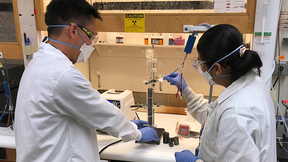
New technique converts excess renewable energy to natural gas
Four Lawrence Livermore National Laboratory (LLNL) researchers have partnered with Los Angeles-based SoCalGas and Munich, Germany-based Electrochaea to develop an electrobioreactor to allow excess renewable electricity from wind and solar sources to be stored in chemical bonds as renewable natural gas. When renewable electricity supply exceeds demand, electric-utility…
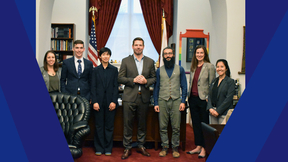
Energy I-Corps experience shines light on bringing specialty resin to the silicone 3D-printing market
In the fall of 2023, Lawrence Livermore National Laboratory (LLNL) scientists Sijia Huang and Michael Ford participated in the Department of Energy’s Energy I-Corps Program, an immersive eight-week entrepreneurial boot camp that teaches scientists and engineers the tools of the trade for commercializing technology from the Lab to the marketplace. A major part of the…
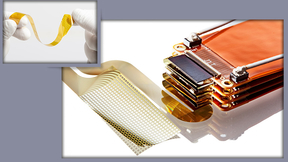
LLNL and Precision Neuroscience collaboration aims to develop next-generation neural implants
Lawrence Livermore National Laboratory (LLNL) has joined forces with Precision Neuroscience Corporation (Precision) to advance the technology of neural implants for patients suffering from a variety of neurological disorders, including stroke, spinal cord injury and neurodegenerative diseases such as Lou Gehrig's disease. Under the three-year collaboration, outlined in a…
Lawrence Livermore makes Glassdoor’s 2024 ‘Best Places to Work’ list
Lawrence Livermore National Laboratory (LLNL) has been honored with a Glassdoor Employees' Choice Award, recognizing the Best Places to Work in 2024. This is the fifth award the Laboratory has earned in Glassdoor’s award program since its inception in 2009. The Employees’ Choice Award, now in its 16th year, is based solely on the input of employees, who elect to provide…

LLNL’s new software licensing portal open for business
The Innovation and Partnerships Office (IPO) has launched a new software licensing portal to facilitate the adoption of the diverse proprietary software solutions developed by Lawrence Livermore National Laboratory (LLNL) researchers. The portal is another outlet from IPO to promote technology transfer through partnerships and licensing opportunities to the private sector…
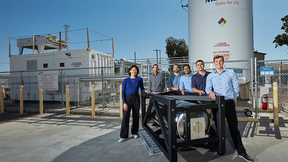
Hydrogen storage demonstrated for semi trucks
Lawrence Livermore National Laboratory (LLNL) and Verne, a San Francisco-based startup, have demonstrated a cryo-compressed hydrogen storage system of suitable scale for heavy-duty vehicles. This is the first time cryo-compressed hydrogen storage has been demonstrated at a scale large enough to be useful for semi trucks, a milestone in high-density hydrogen storage…

New analysis outlines national opportunities to remove CO2 at the gigaton scale
Lawrence Livermore National Laboratory (LLNL) researchers, along with scientists from more than a dozen institutions, have completed a first-of-its-kind high-resolution assessment of carbon dioxide (CO2) removal (CDR) in the United States. The report, “Roads to Removal: Options for Carbon Dioxide Removal in the United States,” charts a path for the United States to achieve…
Lab scientists and engineers garner three awards for top inventions in R&D 100 competition
Lawrence Livermore National Laboratory (LLNL) scientists and engineers have netted three awards among the top 100 inventions worldwide. The trade journal R&D World Magazine recently announced the winners of the awards, often called the “Oscars of innovation,” recognizing new commercial products, technologies and materials that are available for sale or license for…
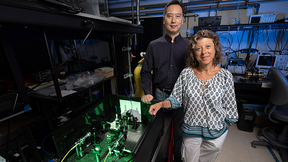
LLNL receives four 2023 TCF grants
Lawrence Livermore National Laboratory (LLNL) researchers have racked up another top-notch year for securing grants through the Department of Energy’s (DOE) Technology Commercialization Fund (TCF) program. Matt Garrett, who was named earlier this year to lead the Lab’s Innovation and Partnerships Office (IPO), noted that the Lab’s engagements with industry are crucial for…
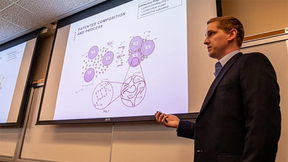
LLNL Innovation and Partnership Office employees net two awards
Two Lawrence Livermore National Laboratory's Innovation and Partnership Office (IPO) employees who brought the television hit “Shark Tank” to LLNL and the Department of Energy (DOE) complex have been honored for their technology commercialization efforts. Hannah Farquar, an IPO business development executive, and Roger Werne, an IPO senior adviser, received two awards…
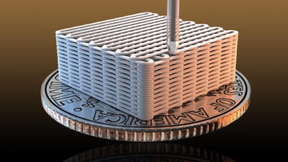
Energy Inks wins regional FLC award
A Lawrence Livermore National Laboratory (LLNL)-developed technology known as Energy Inks has won a best in region award for the Far West region from the Federal Laboratory Consortium for Technology Transfer (FLC). This is the technology’s second award in the past nine months, as it received an R&D 100 award last September as one of the top 100 industrial inventions in…

LLNL participates in Women-Owned Small Business Opportunity Day
The Livermore Open Campus (LVOC) was buzzing Tuesday, March 28, with a crowd that included small business owners, the Office of Small and Disadvantaged Business Utilization (OSDBU) and representatives from five national laboratories. They were gathered for Women-Owned Small Business Opportunity Day, presented by the Department of Energy and jointly hosted by OSDBU, LLNL…

Innovation and Partnerships Office employees capture two national awards
The Department of Energy’s (DOE) Technology Transfer Working Group (TTWG) recently awarded two Lawrence Livermore National Laboratory (LLNL) employees with “Best in Class” awards during their May 13 spring meeting in Washington, D.C. Annemarie Meike, a business development executive within the Innovation and Partnerships Office (IPO), received the Innovative Lab Technology…
LLNL and Amazon Web Services to cooperate on standardized software stack for HPC
Lawrence Livermore National Laboratory (LLNL) and Amazon Web Services (AWS) have signed a memorandum of understanding (MOU) to define the role of leadership-class high performance computing (HPC) in a future where cloud HPC is ubiquitous. Under the MOU, LLNL and AWS will explore software and hardware solutions spanning cloud and on-premises HPC environments, with the goal…
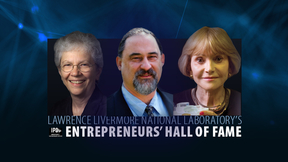
One current, two former Lab scientists inducted into LLNL’s Entrepreneurs’ Hall of Fame
One current and two former Lawrence Livermore National Laboratory (LLNL) scientists have been inducted into the Laboratory’s Entrepreneurs’ Hall of Fame (EHF). The trio, who represent the third class of inductees into the Lab’s EHF, have been honored for developing technologies during or after their Lab careers that created major economic impacts or spawned new companies. …
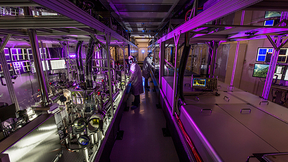
LLNL, ELI-Beamlines reach deal to ramp up L3-HAPLS performance
Lawrence Livermore National Laboratory (LLNL) and ELI-Beamlines in the Czech Republic have reached a major agreement that will build on the relationship between the two organizations and ramp up performance of the L3-High-Repetition-Rate Advanced Petawatt Laser System (L3-HAPLS) to its full design capabilities. The Strategic Partnership Project (SPP) agreement, which was…
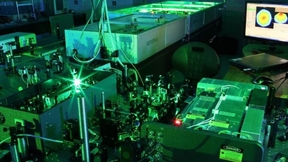
LLNL researchers garner three awards among top 100 industrial inventions
Lawrence Livermore National Laboratory (LLNL) scientists and engineers have collected three awards among the top 100 industrial inventions worldwide. The trade journal R&D World Magazine announced the winners of the awards, often called the “Oscars of invention,” during a three-day virtual ceremony — Oct. 19-21 — and on the magazine’s website. With this year’s results,…