Back
Nuclear deterrence

Strategic Deterrence Academic Collaboration Team awards six scientists to support collaborative research
Six scientists at the Lawrence Livermore National Laboratory (LLNL) were recently granted awards through the Lab’s 2023 Academic Collaboration Team (ACT) annual call for proposals. Awards support university research partners for up to three years to perform research in collaboration with Lab scientists and offer an important way to build long-term connections with…
Excellence recognized at NNSA Defense Programs Awards for 2022 achievements
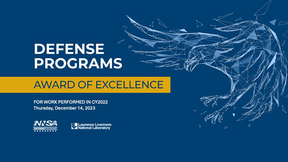
In a virtual ceremony held Dec. 14, Lawrence Livermore National Laboratory (LLNL) and the National Nuclear Security Administration (NNSA) recognized six teams of LLNL researchers with the Defense Programs Award of Excellence. One additional award was acknowledged following the ceremony. The awards commend outstanding contributions made in calendar year 2022. LLNL Deputy…

Energy Secretary honors Lab scientist's contributions to stockpile stewardship
Secretary of Energy Rick Perry recognized Lawrence Livermore National Laboratory (LLNL) chemist Bill McLean with a Secretary’s Achievement Award Wednesday in recognition of "pioneering technical contributions that have led to significant advancements in science-based stockpile stewardship." The Secretary’s Honor Awards are bestowed on individuals who have a singular…
NIF sets new laser energy record
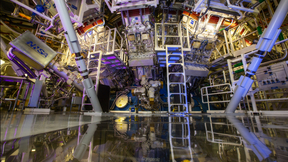
Lawrence Livermore National Laboratory’s (LLNL) National Ignition Facility (NIF) laser system has set a new record, firing 2.15 megajoules (MJ) of energy to its target chamber -- a 15 percent improvement over NIF’s design specification of 1.8 MJ, and more than 10 percent higher than the previous 1.9 MJ energy record set in March 2012. This demonstration shot successfully…
Warhead life extension passes key milestone
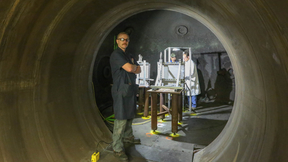
The program to extend the life of the W80 nuclear warhead recently achieved a significant milestone when the National Nuclear Security Administration (NNSA) gave passing grades to the plans to refurbish certain components and the proposed approach to developing component cost estimates. Passing the milestone confirms that the life extension program (LEP), dubbed the W80-4…
Plutonium research to advance stockpile safely
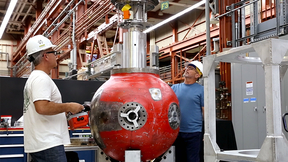
Conducting an experiment that combines high explosives with plutonium -- a special nuclear material used in nuclear weapons -- is no trivial matter. Not only do researchers need to ensure the plutonium remains "subcritical" to avoid a nuclear explosion, they must be absolutely certain that these materials are confined in a worst-case scenario. On top of that, they have to…
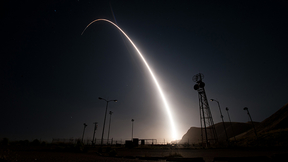
LLNL supports ICBM flight tests
As an unarmed Minuteman III intercontinental ballistic missile (ICBM) rocketed into the night sky, a team of Lawrence Livermore National Laboratory (LLNL) researchers listened intently to radio chatter and watched flight data stream in from a control room at the Ronald Reagan Ballistic Missile Defense Test Site. It was the first of two flight tests conducted recently to…
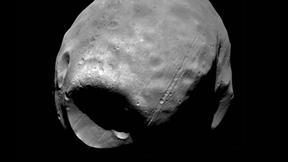
How this Martian moon became the 'Death Star'
Mars’ largest moon, Phobos, has captured public imagination and been shrouded in mystery for decades. But numerical simulations recently conducted at Lawrence Livermore National Laboratory (LLNL) have shed some light on the enigmatic satellite. The dominant feature on the surface of Phobos (22-kilomters across) is Stickney crater (9-km across), a mega crater that spans…

National Ignition Facility tops 400 shots in FY16
LIVERMORE, California – On Sept. 18, the National Ignition Facility (NIF) performed its 400th experiment of fiscal year (FY) 2016, meeting the year's goal several weeks early. In comparison, the facility completed 356 experiments in FY15 and 191 experiments in FY14. NIF is on track to complete 415 experiments by the end of the fiscal year, more than doubling its FY14…

60 years of service to the nation
After finishing his education in physics at Sacramento State, Dan Patterson applied at Lawrence Livermore National Laboratory at the recommendation of his adviser. As part of his interview, he worked on a few physics problems and filled out paperwork for a potential clearance. Six weeks later, he finally got a call asking him to report to work. It was 1955. Little did he…
Event honors 20 years of Stockpile Stewardship
The proven success of the Stockpile Stewardship Program (SSP) – which pushed the limits of modern science and engineering by requiring the transition from explosive nuclear weapons testing to what is effectively virtual nuclear testing – was celebrated Wednesday at a half-day public event hosted by the Department of Energy’s National Nuclear Security Administration (NNSA)…

Labs tap Silicon Valley to bolster computing
The National Nuclear Security Administration’s (NNSA’s) Lawrence Livermore National Laboratory today announced the awarding of a subcontract to Penguin Computing — a leading developer of high-performance Linux cluster computing systems based in Silicon Valley — to bolster computing for stockpile stewardship at its three national security laboratories. Under the terms of…
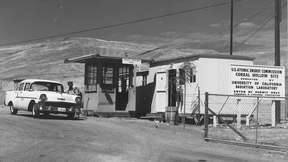
From grassland to 21st century science
Sixty years ago, the UC Radiation Laboratory began testing high explosives at what would become one of the nation’s most sophisticated non-nuclear weapons testing sites, an 11 square-mile plot of rural grassland tucked away in the steep ravines and tawny rolling hills near the Alameda-San Joaquin County line.On Thursday, Site 300 celebrated its 60th anniversary, with a…
National Ignition Facility fires 300th shot in FY15
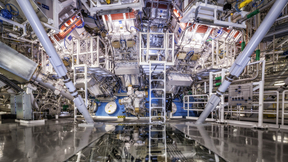
Last week, the National Ignition Facility (NIF) fired its 300th laser target shot in fiscal year (FY) 2015, meeting the year’s goal more than six weeks early. In comparison, the facility completed 191 target shots in FY 2014. Located at Lawrence Livermore National Laboratory (LLNL), the NIF is the world’s most energetic laser.Increasing the shot rate has been a top…
Supplying the 'life-blood' of science
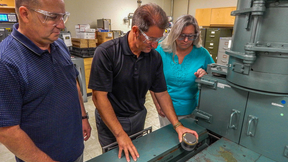
Located one-and-a-half floors underground in LLNL's Bldg. 151, the Nuclear Counting Facility (NCF) leverages its well-shielded, low-background environment to accurately measure nuclear materials for the National ignition Facility (NIF) and a variety of other Laboratory programs.The NCF has been providing high-sensitivity radiation measurements since the inception of…
Lawrence Livermore breaks ground on unclassified supercomputing facility
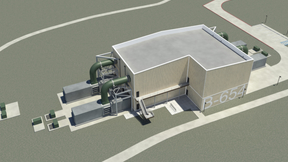
Lawrence Livermore National Laboratory broke ground today on a modular and sustainable supercomputing facility that will provide a flexible infrastructure able to accommodate the Laboratory’s growing demand for high performance computing (HPC). The $9.875 million building, located on the Laboratory’s east side, will ensure computer room space to support the Advanced…
Lab researcher inspired by math
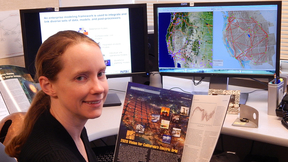
What makes Carol Meyers tick is a series of proofs, theorems and complex equations.The self-described "nerd" has loved mathematics since she was young, and it has helped her succeed as a researcher in Lawrence Livermore National Laboratory's Computational Engineering Division."I've always loved numbers," Meyers said. "I like to think logically. Higher math allows me to…
Livermore joins with Oak Ridge and Argonne to develop next supercomputers
The Lab has joined forces with two other national labs to deliver next generation supercomputers able to perform up to 200 peak petaflops (quadrillions of floating point operations per second), about 10 times faster than today's most powerful high performance computing (HPC) systems. The Collaboration of Oak Ridge, Argonne and Livermore (CORAL) national labs will produce…
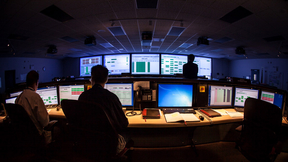
Laser fusion experiment yields record energy at LLNL's National Ignition Facility
LIVERMORE, Calif. -- In the early morning hours of Aug.13, Lawrence Livermore's National Ignition Facility (NIF) focused all 192 of its ultra-powerful laser beams on a tiny deuterium-tritium filled capsule. In the nanoseconds that followed, the capsule imploded and released a neutron yield of nearly 3x10 15 , or approximately 8,000 joules of neutron energy -- approximately…

Charles Verdon selected as Lawrence Livermore principal associate director for Weapons & Complex Integration
LIVERMORE, Calif. -- Lawrence Livermore National Laboratory Director Parney Albright has selected Charles Verdon as principal associate director for Weapons & Complex Integration . Verdon has served in this position in an acting capacity since April 2013."Charlie brings an extraordinarily broad national security technical leadership background and expertise to this…