Back
HPC, Simulation, and Data Science

Machine learning optimizes high-power laser experiments
Commercial fusion energy plants and advanced compact radiation sources may rely on high-intensity high-repetition rate lasers, capable of firing multiple times per second, but humans could be a limiting factor in reacting to changes at these shot rates. Applying advanced computing to this problem, a team of international scientists from Lawrence Livermore National…

LLNL’s El Capitan debuted on new Top500 list of world’s most powerful supercomputers
Three new systems currently or soon-to-be sited at Lawrence Livermore National Laboratory (LLNL) on Monday debuted on the latest Top500 list of most powerful supercomputers in the world, including the first portion of the exascale machine El Capitan. Unveiled at the International Supercomputing Conference in Hamburg, Germany, the June 2024 Top500 lists three systems with…

GUIDE team develops approach to redesign antibodies against viral pandemics
In a groundbreaking development for addressing future viral pandemics, a multi-institutional team involving Lawrence Livermore National Laboratory (LLNL) researchers has successfully combined an artificial intelligence (AI)-backed platform with supercomputing to redesign and restore the effectiveness of antibodies whose ability to fight viruses has been compromised by…
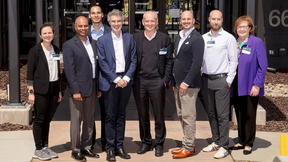
University of California/LLNL joint workshop sparks crucial dialogue on AI safety
Representatives from the Department of Energy (DOE) national laboratories, academia and industry convened recently at the University of California Livermore Collaboration Center (UCLCC) for a workshop aimed at aligning strategies for ensuring safe artificial intelligence (AI). The daylong event, attended by dozens of AI researchers, included keynote speeches by thought…
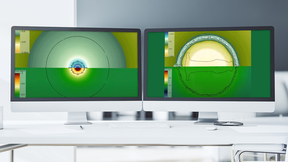
LLNL team accelerates multi-physics simulations with El Capitan predecessor systems
Researchers at Lawrence Livermore National Laboratory (LLNL) have achieved a milestone in accelerating and adding features to complex multi-physics simulations run on Graphics Processing Units (GPUs), a development that could advance high performance computing and engineering. As LLNL readies for El Capitan, the National Nuclear Security Administration’s first exascale…

HPC for Energy Innovation program launches Spring 2024 solicitation
The U.S. Department of Energy’s (DOE’s) High Performance Computing for Energy Innovation (HPC4EI) Program today announced the launch of its latest funding opportunity, inviting companies to propose collaborations with the DOE’s national laboratories that utilize their supercomputing resources and expertise. The HPC4EI umbrella, which includes the HPC4Manufacturing (HPC4Mfg…

WiDS Livermore conference attendees network, share research and absorb wisdom
Lawrence Livermore National Laboratory (LLNL) recently hosted its 7th annual Women in Data Science (WiDS) conference for data scientists, industry professionals, recent graduates and others interested in the field. As an independent satellite of the global WiDS conference celebrating International Women’s Day, the Livermore hybrid event was held to highlight the work and…

LLNL’s Gamblin named to HPCwire’s 'People to Watch' list for 2024
The high performance computing (HPC) publication HPCwire has selected Lawrence Livermore National Laboratory computer scientist Todd Gamblin as one of its “People to Watch” in HPC for 2024. A distinguished member of technical staff in Livermore Computing, Gamblin is best known in the HPC community for creating Spack, a popular open source HPC package management tool that…

HPC for Energy Innovation announces funding for new energy efficiency projects
The Department of Energy’s (DOE) High Performance Computing for Energy Innovation (HPC4EI) initiative today announced over $5 million in new funding for 13 industry partnerships, including a project led at Lawrence Livermore National Laboratory to develop more efficient optical cables. The awards, which stem from DOE’s Office of Energy Efficiency and Renewable Energy’s …

LLNL’s new software licensing portal open for business
The Innovation and Partnerships Office (IPO) has launched a new software licensing portal to facilitate the adoption of the diverse proprietary software solutions developed by Lawrence Livermore National Laboratory (LLNL) researchers. The portal is another outlet from IPO to promote technology transfer through partnerships and licensing opportunities to the private sector…

New commodity supercomputing clusters deployed at NNSA labs claim Top500 spots
Three of the newest National Nuclear Security Administration (NNSA) commodity computing clusters recently deployed at Lawrence Livermore National Laboratory (LLNL) and Sandia National Laboratories (Sandia) are among the most powerful supercomputing systems in the world, Top500 organizers announced Monday. Funded under the second Commodity Technology Systems contract (CTS-2…

Data Days brings Department of Energy labs together for discussions on data management and more
Data researchers, developers, data managers and program managers from the Department of Energy (DOE) national laboratories visited Lawrence Livermore National Laboratory (LLNL) Oct. 24-26 to discuss the latest in data management, sharing and accessibility at the 2023 DOE Data Days (D3) workshop. The three-day event, sponsored by the National Nuclear Security Administration…

LLNL’s Kailkhura elevated to IEEE senior member
The Institute of Electrical and Electronics Engineers (IEEE), the world’s largest technical professional organization, has elevated Lawrence Livermore National Laboratory research staff member Bhavya Kailkhura to the grade of senior member within the organization. IEEE has more than 427,000 members in more than 190 countries, including engineers, scientists and allied…

A different kind of Cyber and Critical Infrastructure Summer Institute
Each year, Lawrence Livermore National Laboratory (LLNL) offers students the opportunity to join the Cyber and Critical Infrastructure Summer Institute (CSI) for an internship working on LLNL’s cybersecurity and critical infrastructure projects. “CSI is for both cyber and non-cyber students. It demonstrates to interns that protecting our critical infrastructure and other…
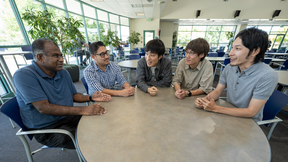
LLNL’s Data Science Summer Institute hosts student interns from Japan
Lawrence Livermore National Laboratory’s Data Science Summer Institute (DSSI) hosted summer student interns from Japan on-site for the first time, where the students worked with Lab mentors on real-world projects in artificial intelligence (AI)-assisted bio-surveillance and automated 3D printing. From June to September, the three students — Raiki Yoshimura, Shinnosuke…

LLNL, University of California partner for AI-driven additive manufacturing research
Lawrence Livermore National Laboratory (LLNL) today announced that Grace Gu, a faculty member in mechanical engineering at the University of California (UC), Berkeley, has been selected as the inaugural recipient of the LLNL Early Career UC Faculty Initiative. The initiative is a joint endeavor between LLNL’s Strategic Deterrence Principal Directorate and UC national…

HPC4EI workshop to highlight opportunities for supercomputing to shape manufacturing’s future
The High Performance Computing for Energy Innovation program will be hosting a special in-person workshop to discuss further deployment of high performance computing (HPC) to advance manufacturing on Oct. 18-19 at Lawrence Livermore National Laboratory’s (LLNL) University of California Livermore Collaboration Center (UCLCC) The workshop will explore future developments in…
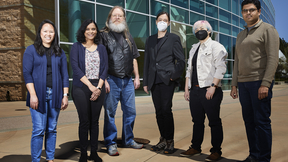
Lab scientists and engineers garner three awards for top inventions in R&D 100 competition
Lawrence Livermore National Laboratory (LLNL) scientists and engineers have netted three awards among the top 100 inventions worldwide. The trade journal R&D World Magazine recently announced the winners of the awards, often called the “Oscars of innovation,” recognizing new commercial products, technologies and materials that are available for sale or license for…
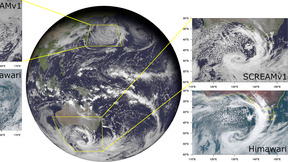
LLNL scientists among finalists for new Gordon Bell climate modeling award
A team from Lawrence Livermore National Laboratory (LLNL) and seven other Department of Energy (DOE) national laboratories is a finalist for the new Association for Computing Machinery (ACM) Gordon Bell Prize for Climate Modeling for running an unprecedented high-resolution global atmosphere model on the world’s first exascale supercomputer. The Gordon Bell submission, led…
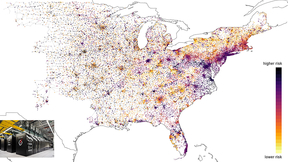
LLNL team reaches milestone in power grid optimization on world’s first exascale supercomputer
Ensuring the nation’s electrical power grid can function with limited disruptions in the event of a natural disaster, catastrophic weather or a manmade attack is a key national security challenge. Compounding the challenge of grid management is the increasing amount of renewable energy sources such as solar and wind that are continually added to the grid, and the fact that…